Updated May 26, 2026 03:10PM
Why Do Seaside Crags Around the World Still Have So Many Bad Bolts?
From Greece to Thailand, steel bolts are failing due to saltwater-induced corrosion. Why haven't they been replaced yet?

In coastal climbing areas like Promontory in northern California, steel bolts can weaken from corrosion in a matter of months. Pictured here, a climber leads "Great White" (5.12b), one of the area's classic routes. (Photo: Evan Wisheropp)
Seaside locations can make for some of the most epic climbing destinations. For example, on the Greek island of Kalymnos, many routes start just above the shoreline, in bands of bleached limestone cut by gashes of runoff. They rise steeply into caves and overhangs, many polished and greased, a tangerine orange now, worn by decades of use. Below, the Aegean Sea is close enough to hear, sometimes close enough to smell, and easily carried up by the wind. It’s on the ticklist for some, on the Pinterest board for many.
But coastal climbing is also built on an assumption: that the hardware is solid. When you clip into the anchors and start lowering, removing your draws on the way down, you trust that the bolts will hold.
Lately, that assumption has been challenged in horrifying ways.
On March 27, a 60-year-old Czech climber, Petr Hruban, had just finished climbing St. Savvas, a 60-foot 5.12c on the west side of Kalymnos, and began to lower. That’s when both anchor bolts failed, sending him down the steep face towards his third point of protection. It also sheared under the force of his fall. He landed on an intermediate ledge roughly 40 feet below, close to the belay stance. After a five-hour rescue, he passed away, having never set foot in the hospital.
Triple bolt failures like this are rare, and fatal ones rarer still: one local account described Hruban’s death as only the second fatality in more than two decades. Most incidents involve more familiar errors, like ropes that are too short or missing stopper knots, rather than three rounds of hardware failure.
ADVERTISEMENT
But while the details of the accident are grisly and straightforward, its implications are not. The bolts on St. Savvas were more than 20 years old, stainless steel and close to the ceiling of their lifespan. And on an island with roughly 5,000 bolted sport routes, about 1,000 of them the same age, that detail is critical.
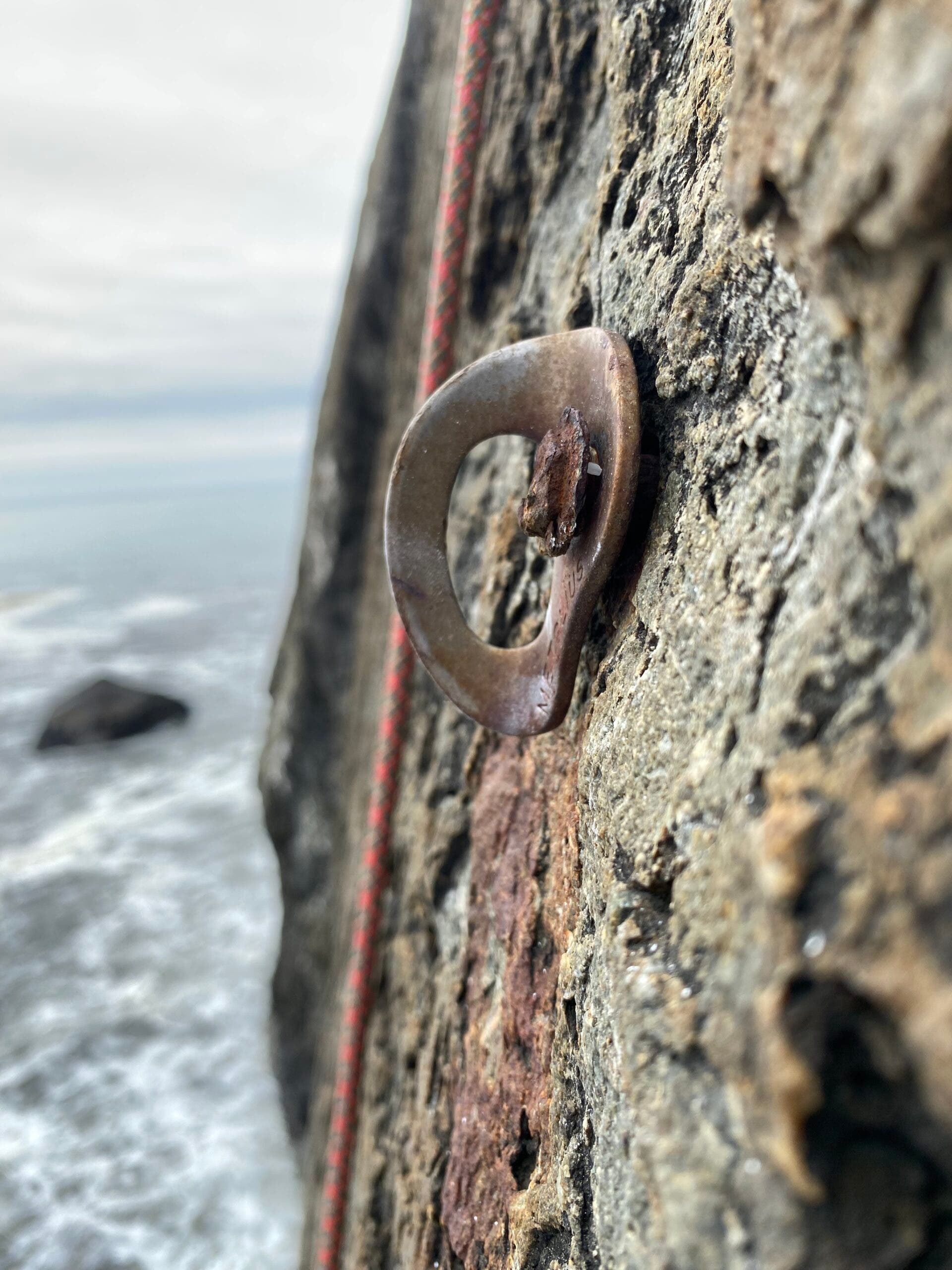
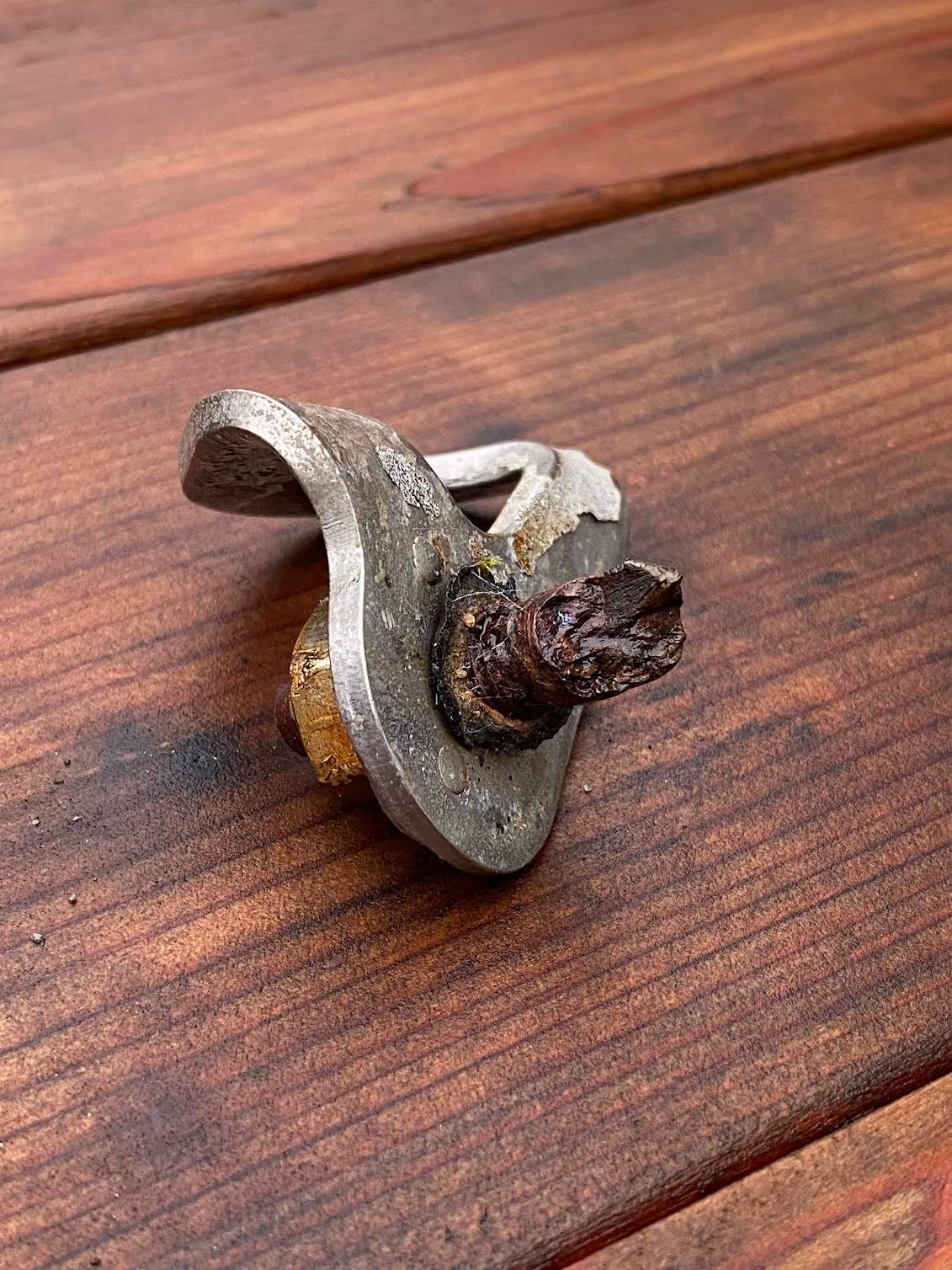
In seaside environments, stainless steel presents a unique danger to climbers: corrosion from the inside out. The coarse mixture of salt and humidity in the air only accelerates this process, weakening the metal in ways not always visible. In marine areas, steel bolts that should last for 20 years can break down in as little as three months, whereas titanium bolts can last up to 200 years in the same environments. So why do we still see so many deadly, steel bolts in coastal areas across the world?
Bigger than Kalymnos
Kalymnos isn’t an outlier in suffering from corroded bolts. In Sardinia, Italian route developer Maurizio Oviglia warned in a 2020 fundraising appeal that stainless steel anchors had already failed at multiple seaside crags, including Cala Luna, Millennium Cave and Biddiriscottai. He launched a fundraising appeal for replacement hardware, arguing that marine conditions around the island were corroding stainless steel far faster than originally expected.
A similar conversation has unfolded in Spain’s Costa Blanca, where route developers and rebolters have increasingly shifted towards titanium. Trevor Massiah of Rock & Sun, who has helped develop and maintain routes throughout the region, wrote in a fundraising appeal that the area has already seen numerous “fixed anchor chain failures” alongside stainless steel glue-in failures elsewhere in the Mediterranean. His group has replaced anchors at Sierra de Toix Oeste with titanium glue-ins, but noted that “there is no bolt fund” in the Costa Blanca and that maintenance often relies on personal expense, donations and volunteer labor. Rock & Sun estimates the average cost of equipping a route at roughly £120, with titanium systems costing around 30% more than standard expansion bolts.
In places like Railay Beach, Thailand, stainless steel bolts began failing after only a few years in use. The failures eventually led to large-scale titanium rebolting efforts through projects like the Thaitanium Project, a volunteer initiative supported in part by the American Safe Climbing Association.
While it’s only half as durable as steel, titanium is widely preferred in coastal climbing areas because it does not corrode. In 2024, Ryan Jenks of HowNot2 published a comprehensive bolt comparison, noting that even “high-end” steel bolts, such as the “marine-grade” 316 stainless, can completely fail within 3 years in harsh marine environments.
“Titanium is the best option for any areas that have a risk of [stress corrosion cracking],” he wrote. “It may feel more expensive, but it isn’t much more. If a 100-year cost for an anchor is considered, titanium is significantly cheaper if it doesn’t have to be replaced.”
ADVERTISEMENT
Changing bolts by changing minds
The shift from stainless steel to titanium has been gradual, aching and expensive. It hasn’t followed a single decisive moment, but rather a series of slight adjustments: new information here, new materials there and a growing understanding of how damaging coastal weather can be.
“At the time, nobody was thinking about how long bolts would last,” says Claude Remy, a Swiss climber and longtime route developer who has bolted extensively across Europe, including in Kalymnos. “It was just about making new routes.”
ADVERTISEMENT
In the late 1990s, he explained, stainless steel was widely considered strong enough for most environments. “Climbing development was made by many different teams coming from different countries with different styles of different equipment,” Remy said. “Most of them used M10 inox [stainless steel] bolts. At the time it was the best, and then [it was] considered sufficient for marine environments.”
Over time, that understanding began to shift, first in places like Railay and Tonsai in Thailand, and across coastal crags in southern Europe, from the Calanques in France to Finale Ligure in Italy and Costa Blanca in Spain. The rapid degradation was becoming harder to ignore. Early rebolting efforts didn’t just replace steel hardware; they reframed it as an impending issue.
By 2015, the warnings were explicit. The UIAA Safety Commission reported that stress corrosion cracking had already led to stainless steel anchor failures, sometimes within months, and under little more than body weight. The organization listed 13 areas, including Hawaii, Portugal, Malta, Minorca, Thailand, Sardinia, Greece, and the Dominican Republic, as places where stress corrosion cracking had been confirmed or highly suspected.
Still, even if the solution was widely understood, the difficulty emerged in carrying it out.
ADVERTISEMENT
Mind the gap
Dimitris Gerolympos, head of communications for Rebolt Kalymnos, says the continued presence of non-titanium bolts isn’t the result of a single oversight. “The continued presence of non-titanium bolts in marine environments is a mix of historical context, cost constraints, and the scale and logistics of replacement,” he says.
By the time titanium began to be more widely recommended, thousands of routes had already been established on the island. And because it appeared to perform reasonably well, there was little immediate pressure to replace it. The failures, when they came, were sporadic, sparse, and easy to consider isolated
ADVERTISEMENT
“The transition is happening,” Gerolympos says, “but it’s uneven and slower than ideal.”
After several decades of bolting with steel, the scale of the problem has outpaced what individuals can reasonably keep up with. Rebolt Kalymnos emerged as a way to centralize that effort, to track what needed replacing, prioritize the most urgent fixes, and begin to frame the island’s infrastructure as something that requires ongoing care.
Switching to titanium isn’t just a matter of swapping one bolt for another. Most titanium systems are glue-ins, which require more preparation and more precision than expansion bolts. The hole has to be cleaned thoroughly. The adhesive has to be placed correctly. The bolt has to be set and left to cure. It’s slower work, and less forgiving.
ADVERTISEMENT
“When it comes to rebolting, the transition to titanium is more straightforward in principle, but cost has still been a major limiting factor,” Gerolympos says. “Because there hadn’t been widespread or highly visible failures locally, and materials seemed to be holding up reasonably well, there wasn’t the same urgency that might have otherwise driven earlier large-scale titanium initiatives.” After the high-profile death of Hruban, this urgency may be finally picking up.
Looking forward, the rebolting efforts in seaside climbing areas will depend on the support of the community and the local volunteers who take up the task. When you next visit a coastal climbing area and notice corroded steel, consider donating to their local climbing organization’s rebolting fund. We can all benefit from being able to clip into the anchors of beautiful routes without worrying about how long ago they were added—or how long they’ll last.
